
I woke up with the calming white noise sound of the river coming through the window. I saw a text that Hale at home wanted to chat. It was still last night for him. We agreed to talk in 45 minutes when everyone else in the room was up.
I got dressed and we had a good FaceTime chat, me well-rested while he was yawning and ready for bed. It was good to see his face after almost a week apart.
Even though I’d done laundry in Obanos, my wardrobe is limited, so it was time for some laundry again.


I decided to brave using the washing machine and tried to make sure it was cold water only since I have lots of merino wool socks and ropa interior. (It’s great by the way! Who knew wool underwear was comfortable!)
I drove myself a little crazy watching the lights go on next to what looked like symbol for hot water, but it all came out ok and I hung it up to dry on a rack in this scenic spot just outside the albergue.
Once that was done, it was time to enjoy my rest day in Estella. I walked down into town again and ran into Linda and Mark who I’d met in Cirauqui, walking through town on the Camino. They were skipping Estella and staying farther along. It was my favorite kind of Camino moment.

We shared contact info and they also shared some lambswool for my developing blister. Wearing my crocs was helping it settle down, but I was grateful for the gift.
We said our Buen Caminos, and I peeled off to see all the churches in Estella, which I’ve read about in my trusty guidebooks.
Estella is built into a gorge with rocky peaks all around the touch the edges of the old town. The way it was as organized around a river and hills reminded me of Cincinnati. All of the churches I wanted to see were built elevated way above street level. The first one was San Pedro de Rua.


Another nice examples of Santiago the Pilgrim and a prayer to go with it. The cloister was unique, set into the hill.
After climbing all those stairs, I left the church at the top of the hill and noticed that the city had built a free-standing glass elevator. I took advantage of it since the prospect of going down all those stairs without a handrail and without my poles was stressing me out.
I walked across the river and into the heart of the medieval town to find Iglesia de San Miguel. It was also way up on a rocky crag.
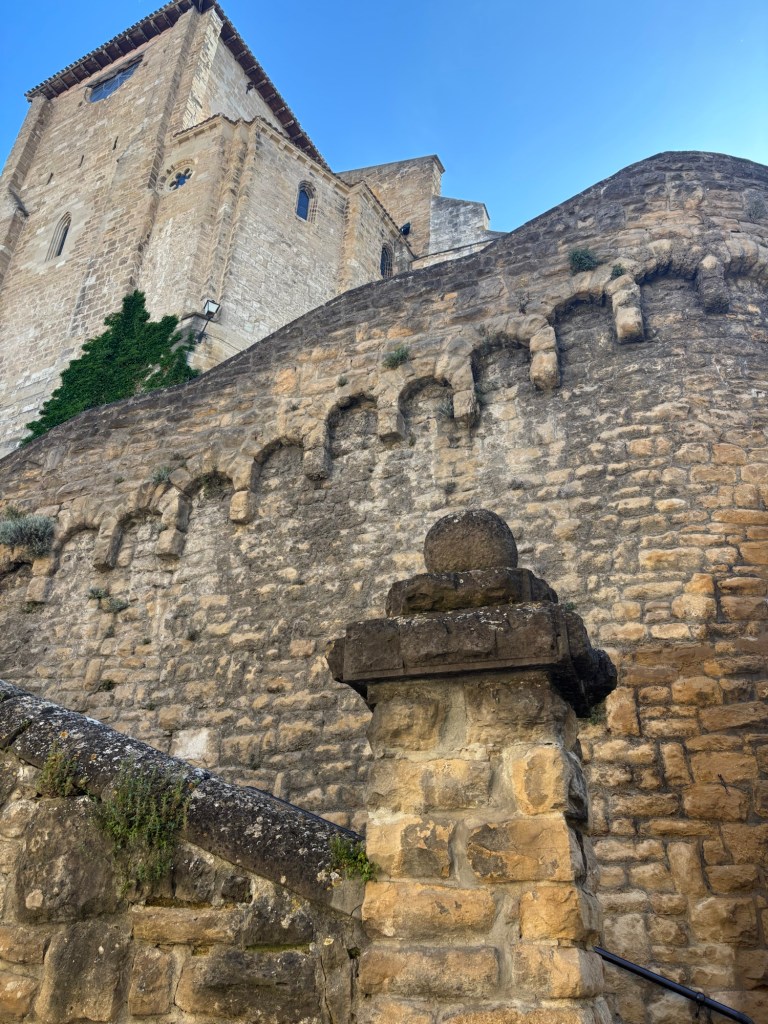
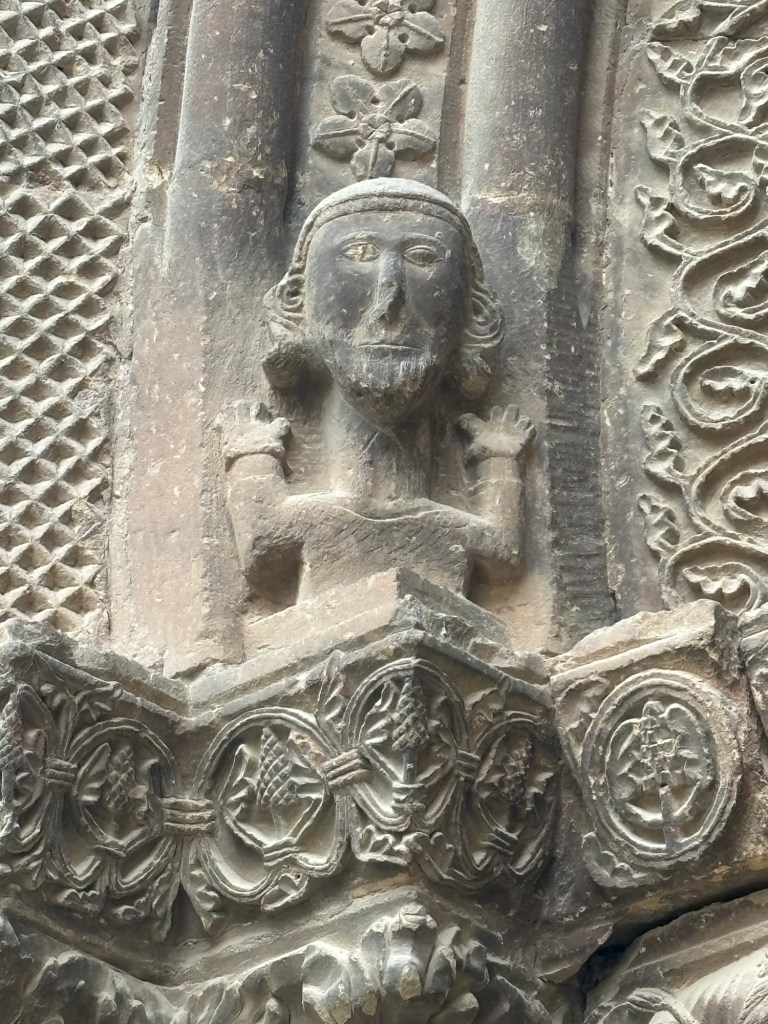
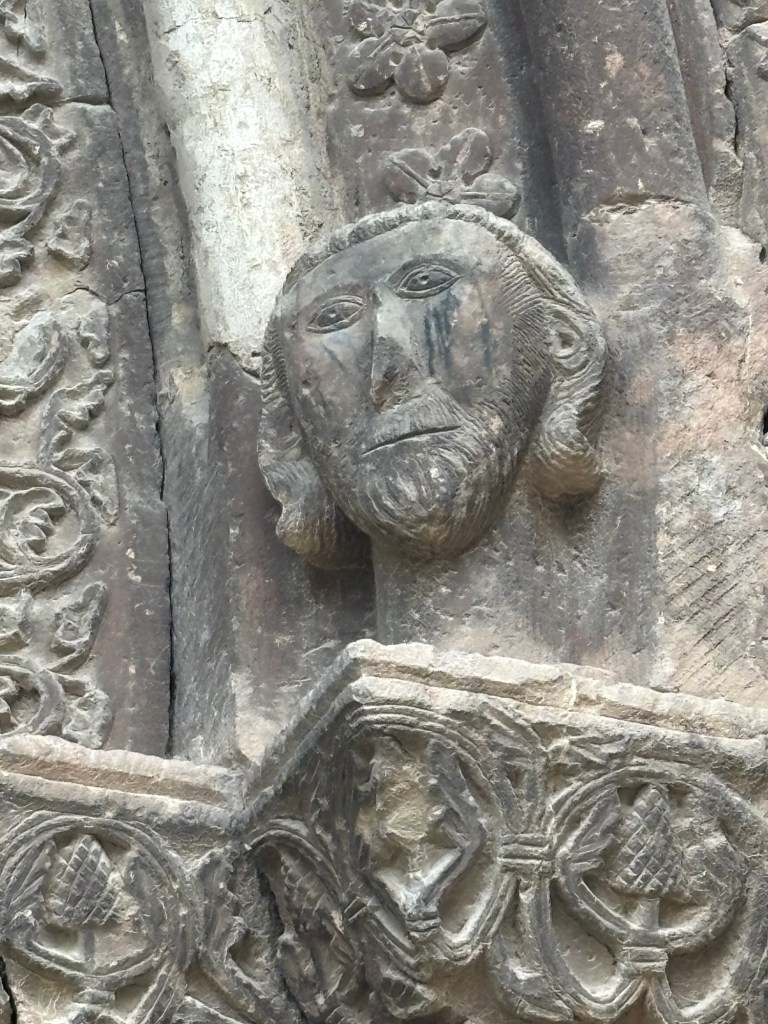
Once up there, I found the best part: the art around the entry. Truly worth the climb!
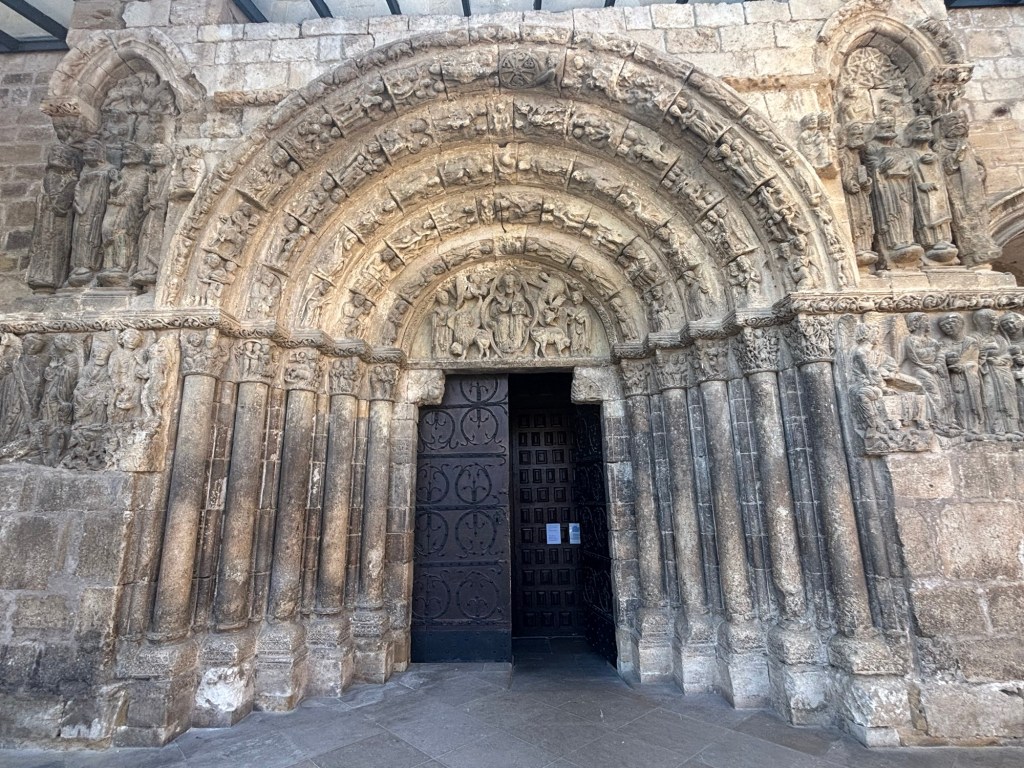
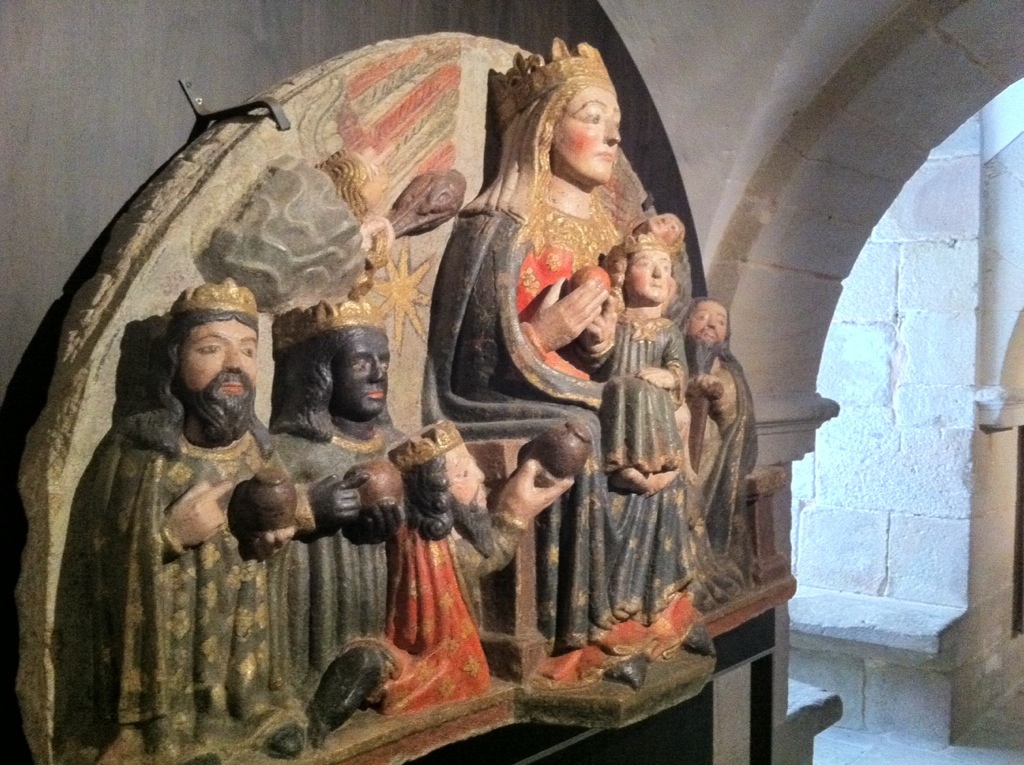
There were so many identifiable biblical scenes:


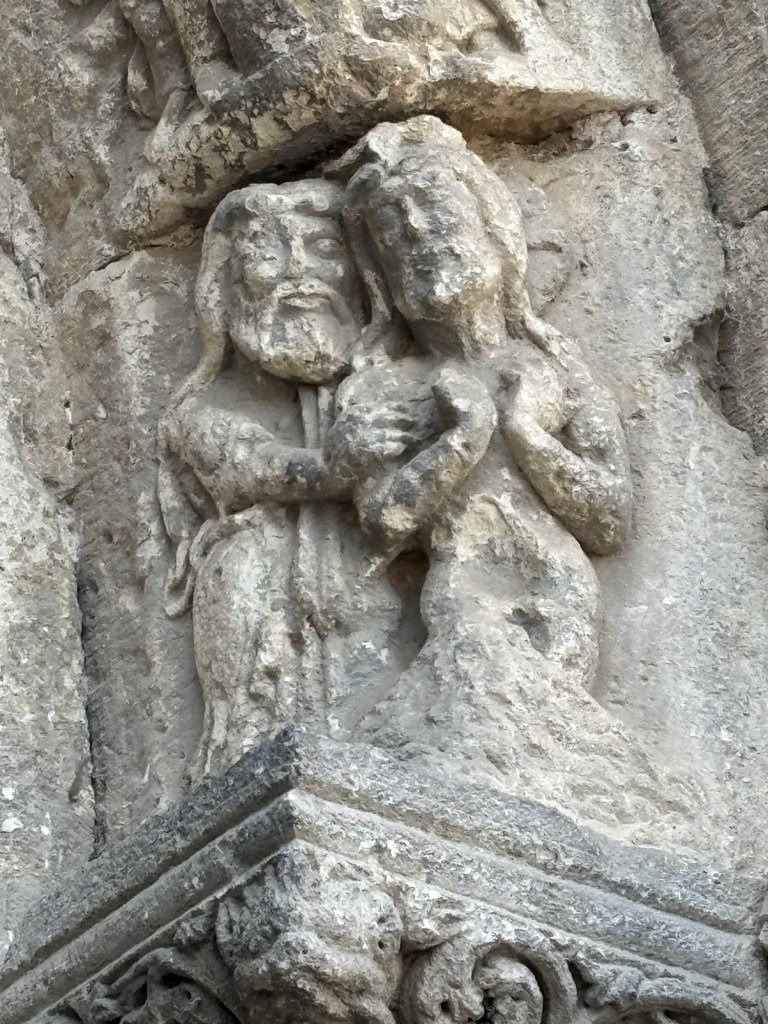
And there were some more unusual carvings, too.


The church itself wasn’t that interesting on the inside. The terrace had another ancient olive tree growing out of the rock.

After contemplating the entryway sculpture again, I wandered out into the street on the upside of the church to find some lunch.
I was noticing that Estella was quite a diverse town. I saw lots of women in headscarves, and I also ran across a tienda with Mexican products. I’d read that since the Middle Ages Estella was known for its Jewish, Muslim, and French population.
After a slice of tortilla for lunch, I ventured on to see the Basilica of Our Lady of Puy. The guidebook said it was on a hill overlooking the city and they weren’t kidding. About half way up, I thought, “why am I doing this?” It was like climbing Telegraph Hill in San Francisco, but on a hot day.
I sat on the side of the road and rested for a minute. What happened to my rest day? I was up to 10,000 steps already.
When I got to the top I found the basilica open. It was built in the 1950’s where a much older structure had disintegrated.
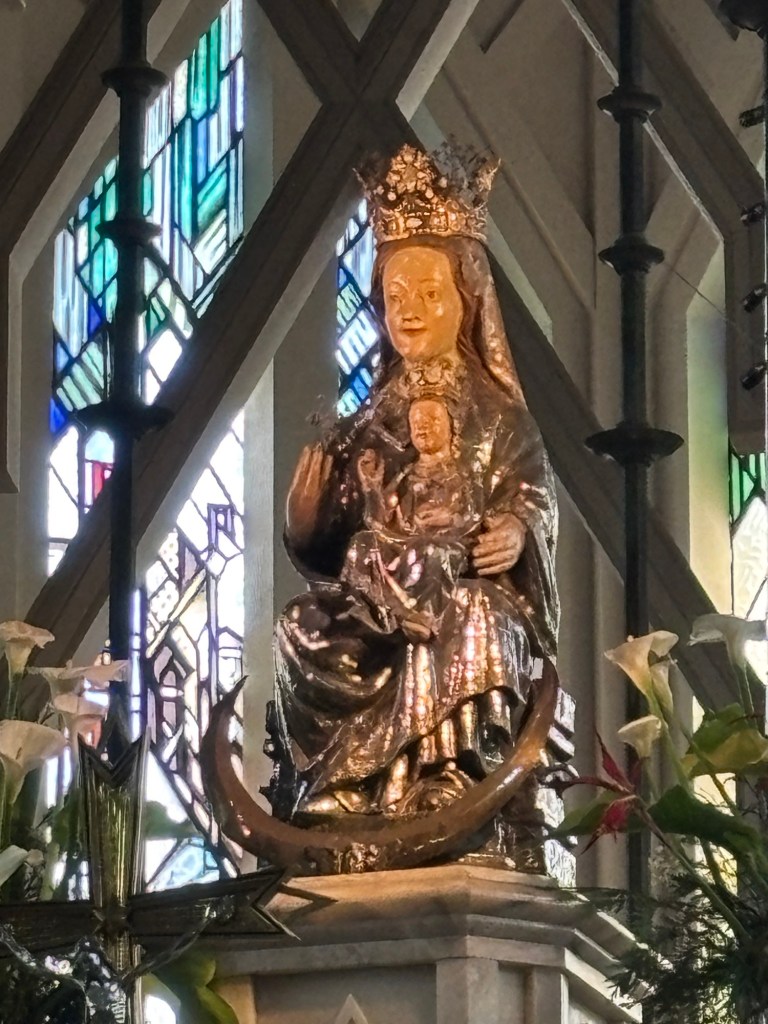
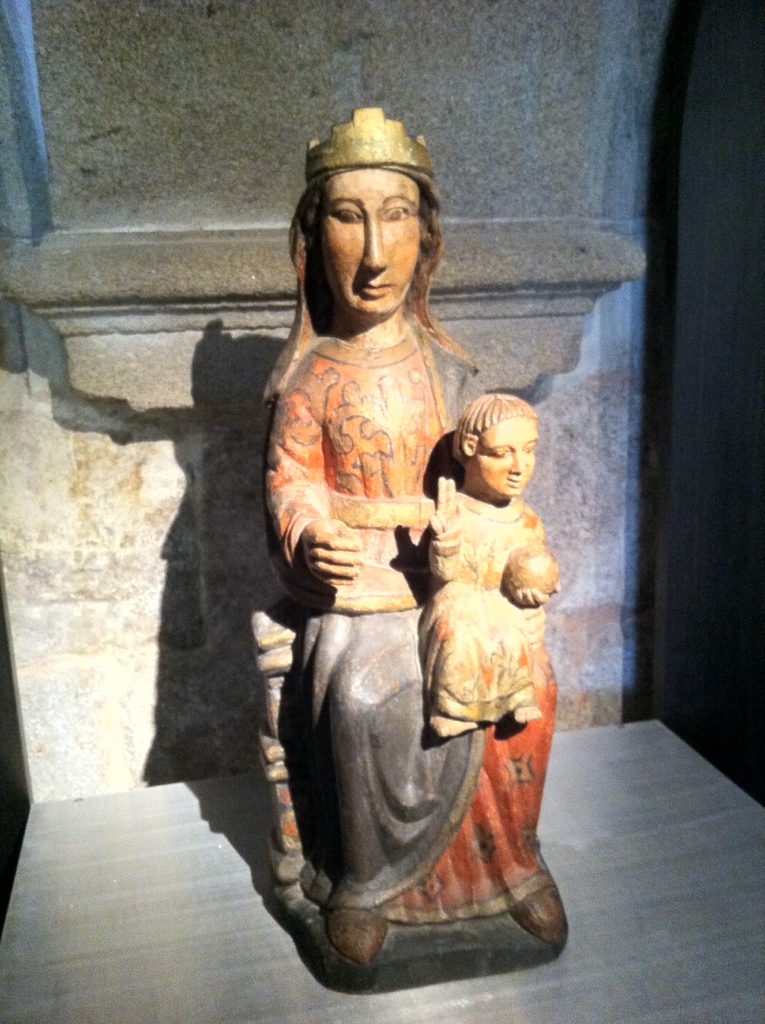
In 1085 shepherds reported seeing stars falling over the hill in front of the mouth of a cave. When they went inside, they found the statue of the Virgen there, in the cave. It’s a similar story to the Virgen in Nájera, one of my favorite spots on the Camino.
These Black Madonna stories fascinate me, so I had to see it.

No one was there so I had the place to myself. The people of Estella decided to honor their multi-faith heritage when the new structure was designed, so it has a Moorish feel and incorporates the symbol of Estella the Mudejar eight pointed star.

I’m confused whether this is the original statue because my excellent guidebook, The Moon Camino de Santiago by Beene Bahrain, says the original one is at the back of the church, but I didn’t see any statue there, just the one over the altar. She does seem to glow. She has the image of the moon under her feet much like Our Lady of Guadeloupe in Mexico.
My so called rest day continued with a careful walk down the hill just as hundreds of high school students exited the two secondary schools which are also up there on the hill. I returned to the albergue and met the new women in the room, a very fastidious woman from Korea, and a Spanish woman named Toni. I took a siesta nap, and headed out for an early dinner.
Estella was a good place for a rest day, though I did miss walking. When I set up my itinerary I thought I would be more tired than I was. But I enjoyed seeing more of Estella.
With newly clean clothes, I packed up for my next stop in the morning, Villamayor de Monjardin, about 12k up the road.


















 One Footestep at a Time