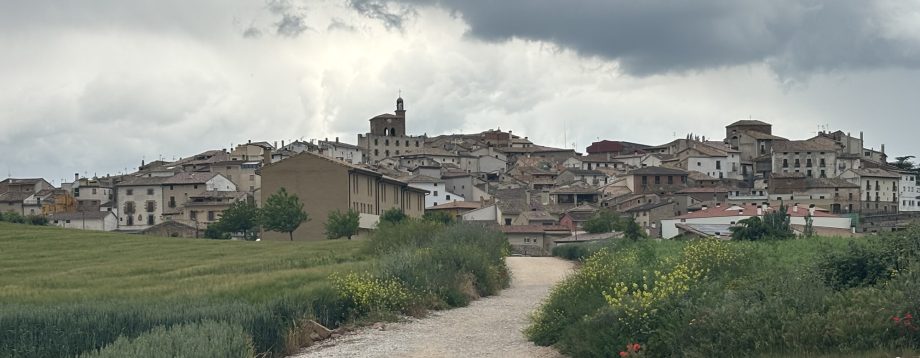
At 7:15 I was outside the hotel with my bag, and met the cheery Jacotrans driver, who quickly took my bag, backed down the short little street, and disappeared around the corner.
I regretted telling the taxi to come at 9:30 since it would make my walk from Villafranca start pretty late, but it did give me time to find breakfast.
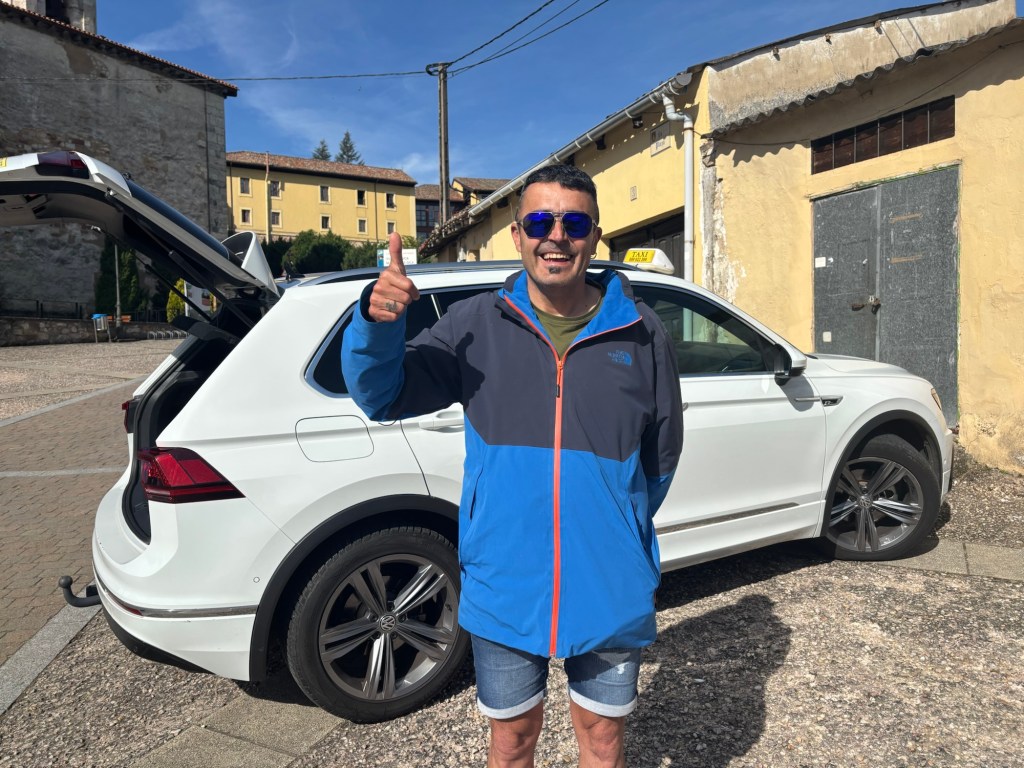
My taxi driver Dani showed up early and he invited me to sit in the front seat. We had a typical Camino Spanish learner meets English learner conversation as we sped up the A12 carretera named after the Camino de Santiago.
As we drove, he pointed out places where we could see the Camino from the road, and we passed by places I remembered from before: Santo Domingo de Calzada, Belorado, Tosantos, all while showing me photos on his phone. He had a new baby who was baptized in the famous church in Navarrete but somehow I didn’t recognize the town he described. “You must know it,” he said. Then it dawned on me he was pronouncing Navarrete correctly in Spanish! NaVARaTEE. Putting the emphasis on the ETTE like I’d always done was incorrect. Oh! My pronunciation got a good-hearted laugh.
Before long we were exiting at Villafranca Monte’s de Oca, where I wanted to start walking. He dropped me off up near the church and hotel where the path starts uphill into the forest. Having walked the Camino three times, once with his pregnant wife, he knew the spot.
I’d been harboring some anxiety about taking a taxi, and feeling less pilgrim-like because of it, but I’d enjoyed the ride and conversation with Dani. The Camino Magic turns up in unexpected ways.
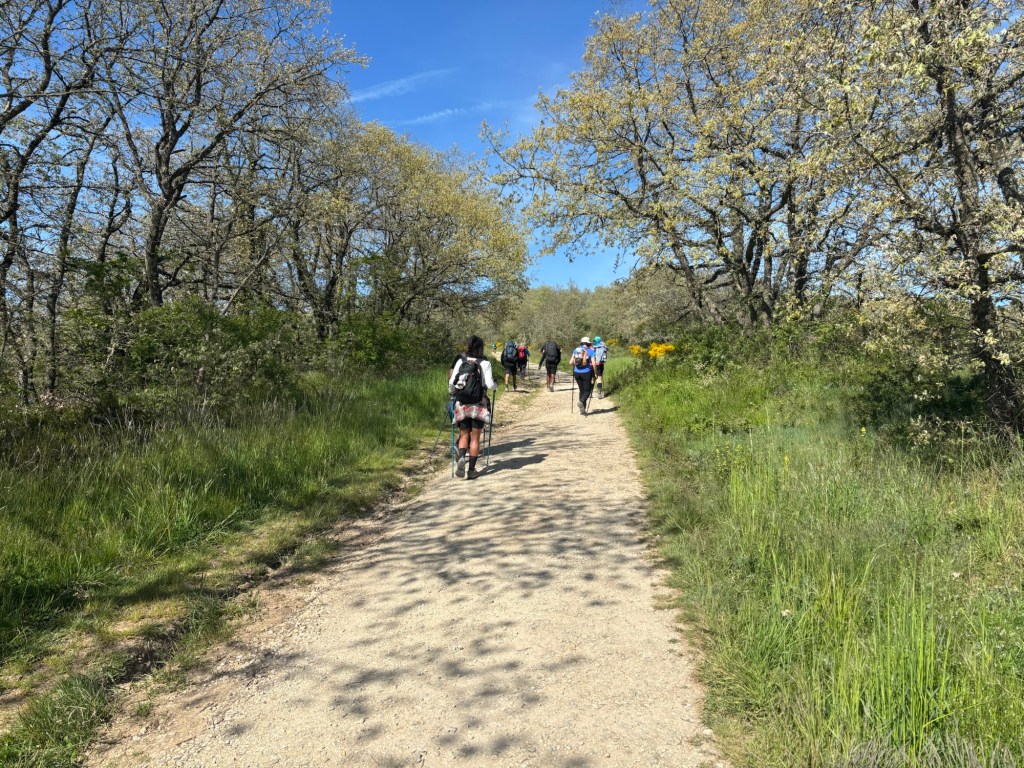
I got to my jumping off place at 10:00 and there were a ton of pilgrims heading up the hill with me. I felt very much a part of the great pilgrim stream.
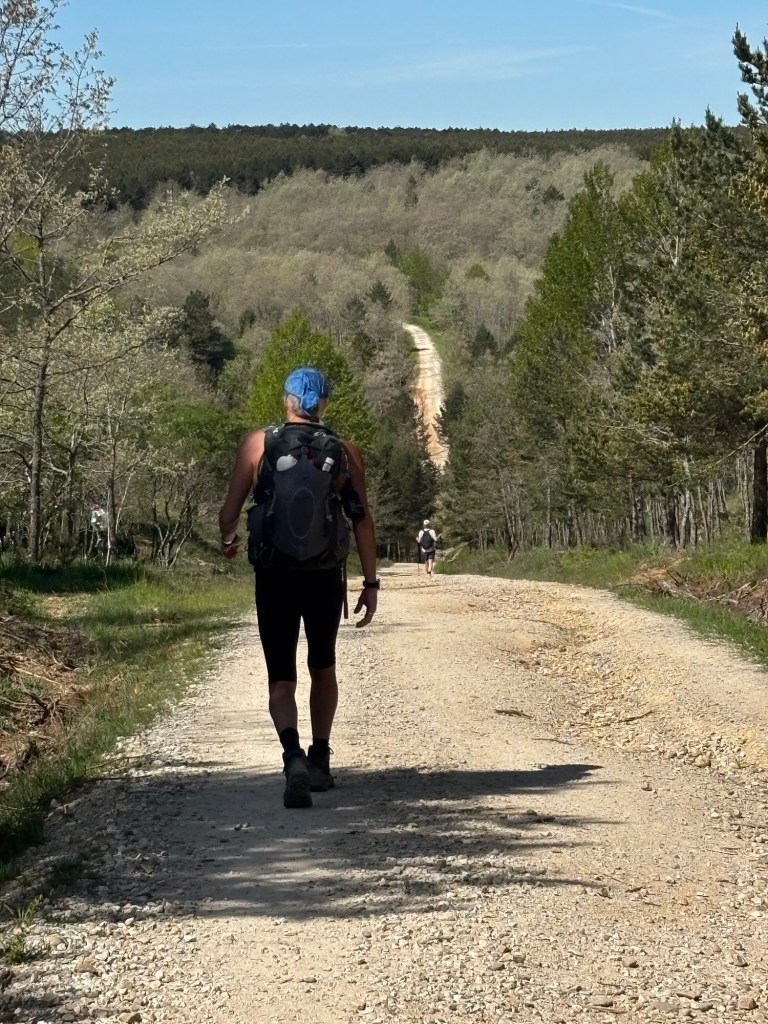
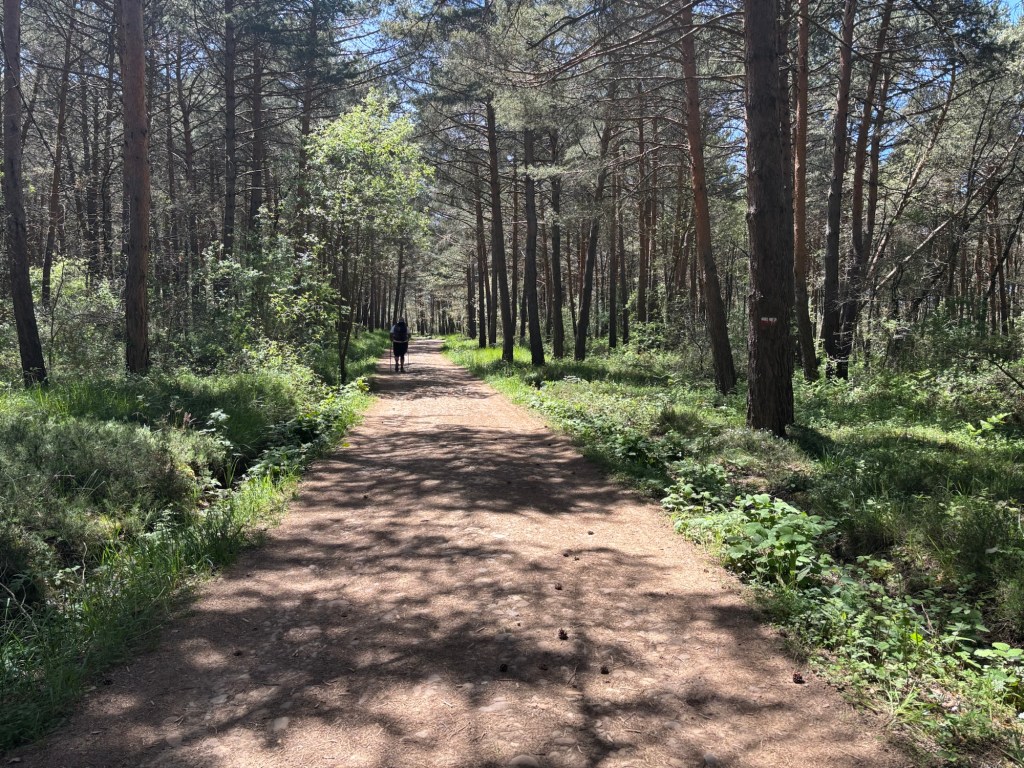
The path there is like a fire road that goes up into pine woods that at times reminded me of Tahoe.
It’s a 13k stretch with no services until the small village of San Juan de Ortega. In the Middle Ages this area was considered dangerous because it was the perfect place for bandits.
The sky was blue, there was a breeze, it was really nice hiking weather. Part of the reason I chose this place to rejoin the Camino went back to my 2013 walk.
This was where my ankle tendinitis kicked in on my first Camino. I limped into San Juan de Ortega, and my Camino was pretty much over after that. I was drawn to walk this segment again and heal that memory somehow.
About 4k into the walk is a memorial to 300 people who were massacred and buried at that spot in 1936 by Franco’s fascist forces.
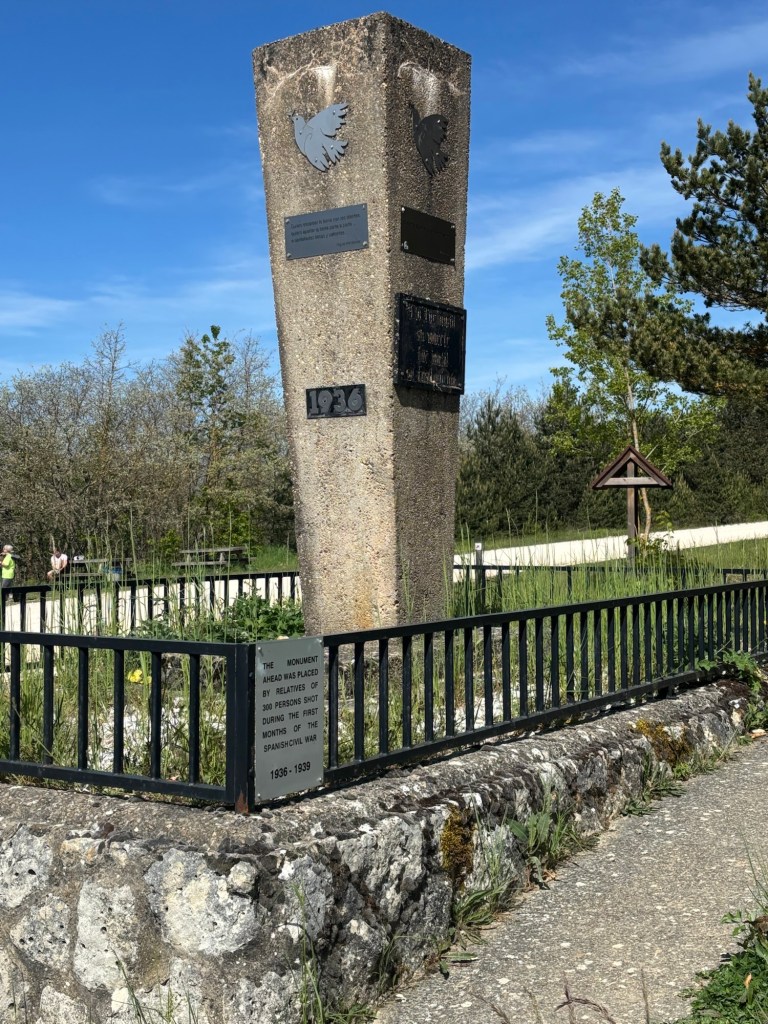


It looked like there had been archaeological work done on the site in the last few years, documenting how the bodies were buried, and then they were reburied in Villafranca de la Oca. I’d read how people in Spain were looking for missing relatives and asking questions about the Civil War. Mass graves like this were being found many places.
In 2013 I saw the site as a sobering relic of history, but seeing it again in 2025 it was much more relatable to our current times. How easily we too could slip into fascism and violence in our divided, well-armed country.
The path went on through the woods and I was enjoying the physicality of the walk. My fitness level was finally advancing just as I was getting towards the end of my mini-Camino. I’d forgotten how automatic walking became after walking for a week or so. It’s like your legs just know what to do and you don’t need to think about it, and your heart and lungs and legs are in synch.
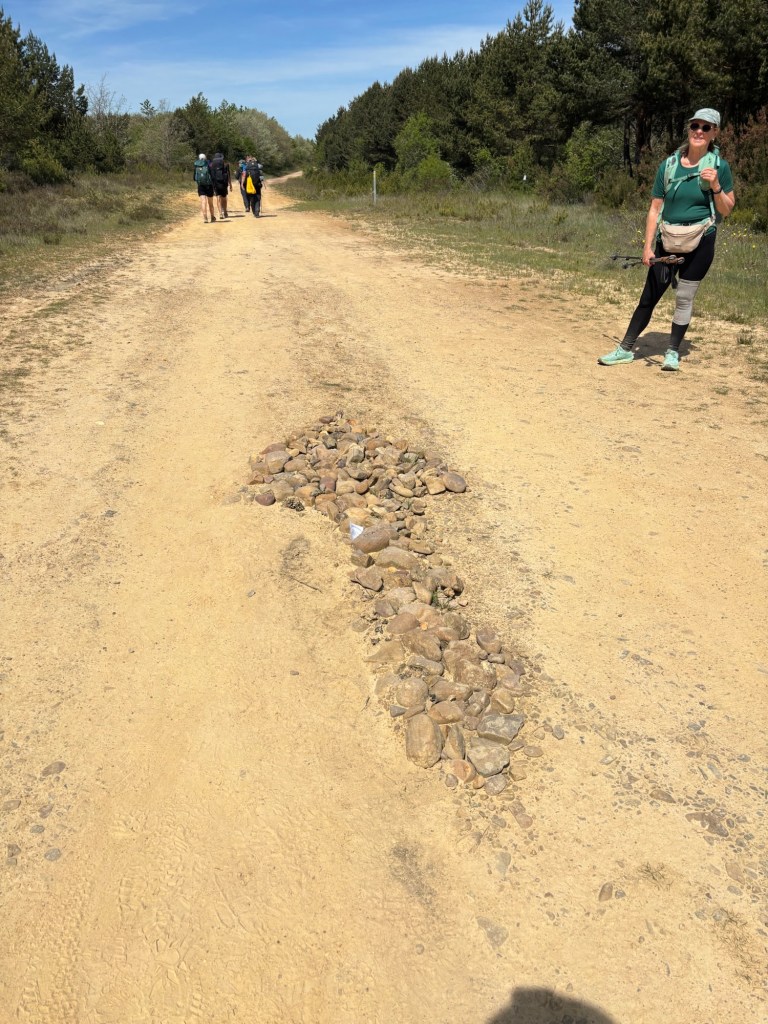
I fell into conversation with a couple from Boise who had Southern California roots. Jim and Sheri. We walked the next 5-6 k together talking about life until they said they needed to pick up their pace.
Finally, the path started descending slightly and I saw San Juan de Ortega coming into view. I’d made it without an injury. For some reason, that felt fulfilling to me.

San Juan de Ortega is a tiny place, the medieval church with the shrine of the saint, the old monastery hostel, and a bar. But since 2013 things had improved! There was a whole new albergue, with a bar, a Casa Rural, and the monastery albergue looked much cleaner from the outside. I visited the shrine and gave thanks for healing and for the new pilgrim infrastructure. The saint, San Juan de Ortega, would approve. He was a major builder along the medieval Camino, and did everything he could to serve the pilgrims walking to Santiago,
I sat down at the outdoor tables to have lunch and ended up eating with Jim and Sheri. I’d caught up with them after all.

It was 3:00 by the time I finished lunch and put my boots back on. I had 4k more to go to my albergue in Ages.
It felt like a milestone to walk away from San Juan de Ortega, healthy and strong. The walk was flat and green for the next couple of hours, like English countryside in some ways.
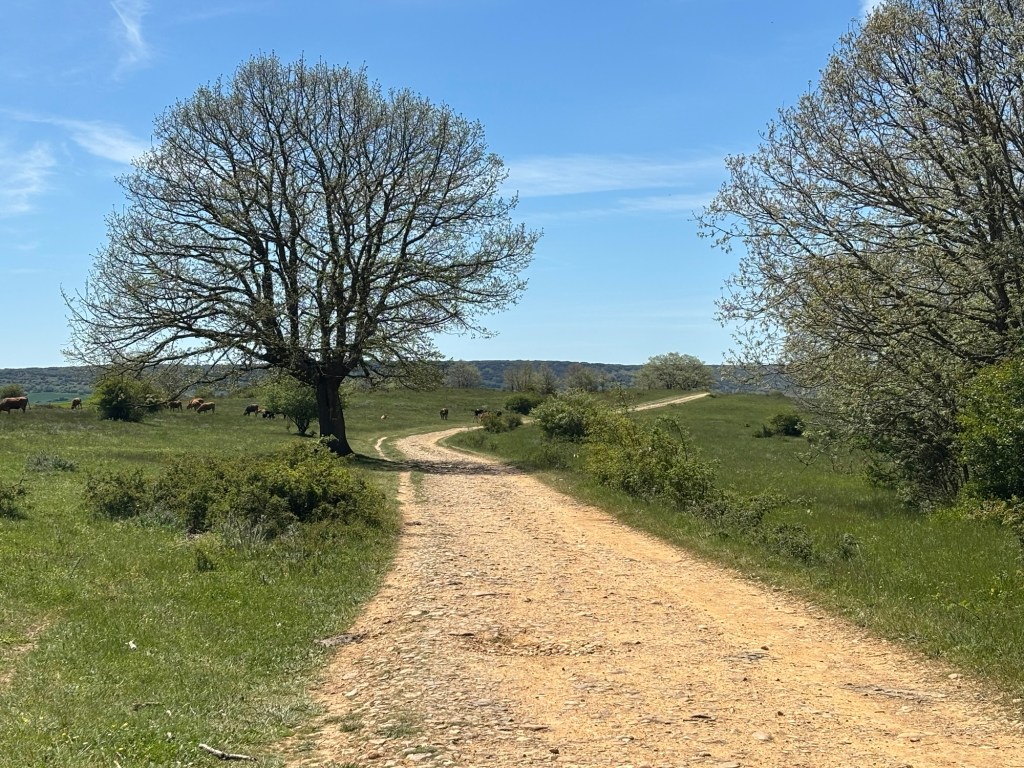
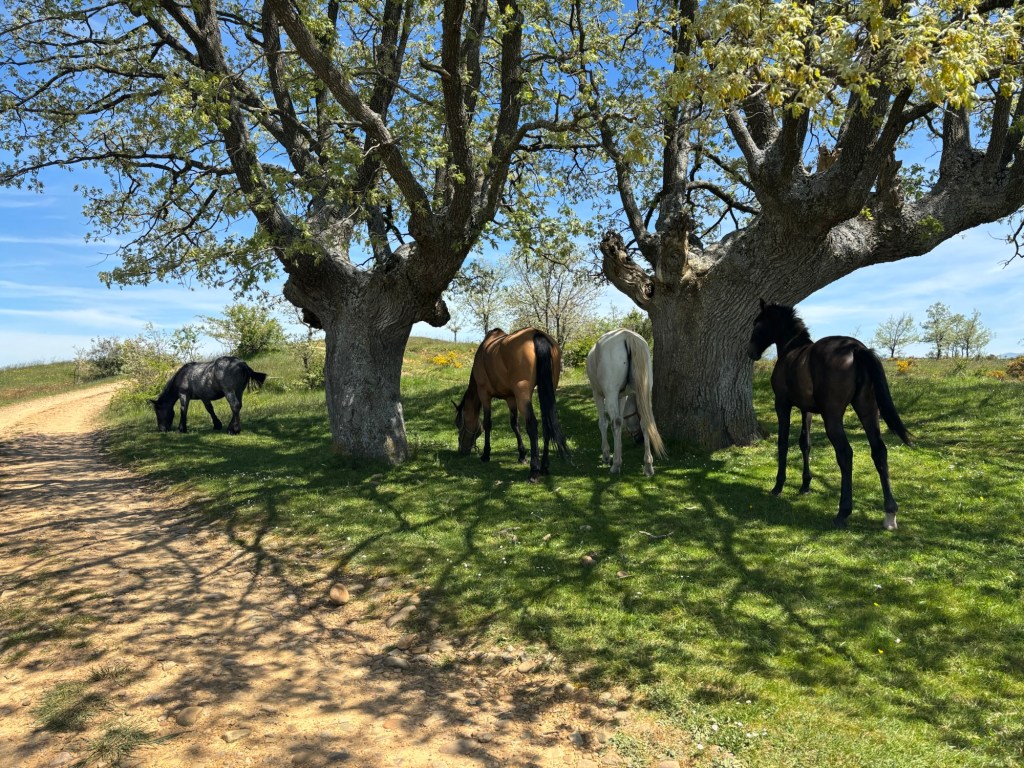

It was an easy few kilometers even though I felt my legs getting red, hot and itchy again with heat rash. The Creepers merino toe socks I’m wearing this time have been fantastic—no blisters—but maybe they are too hot.
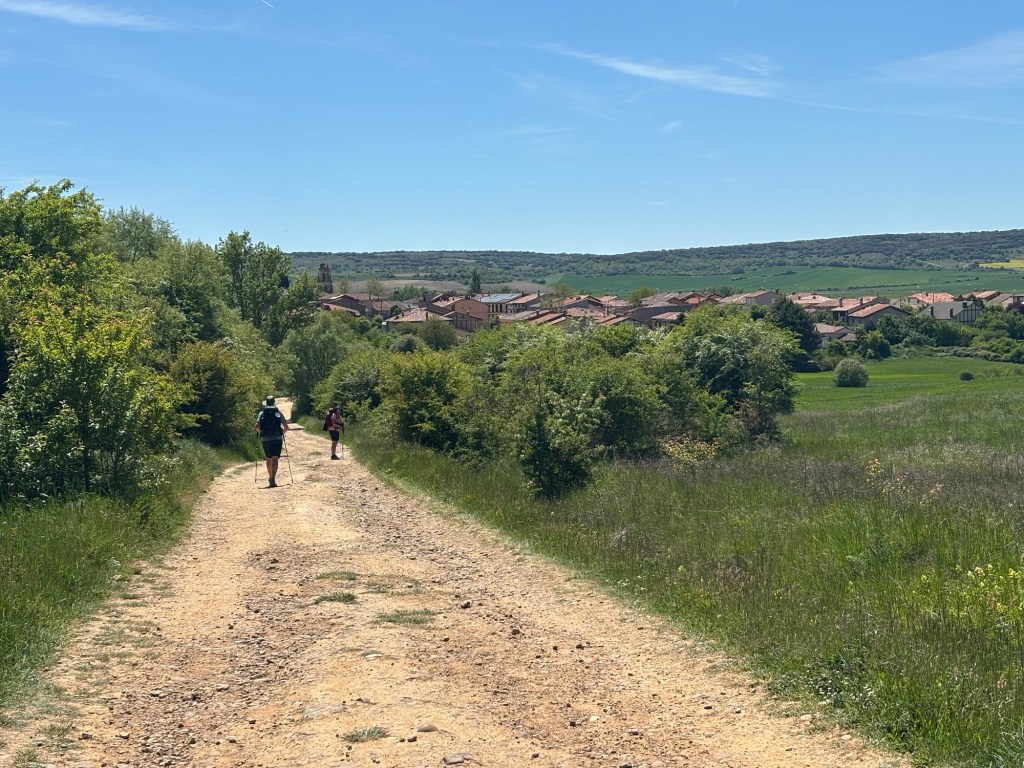
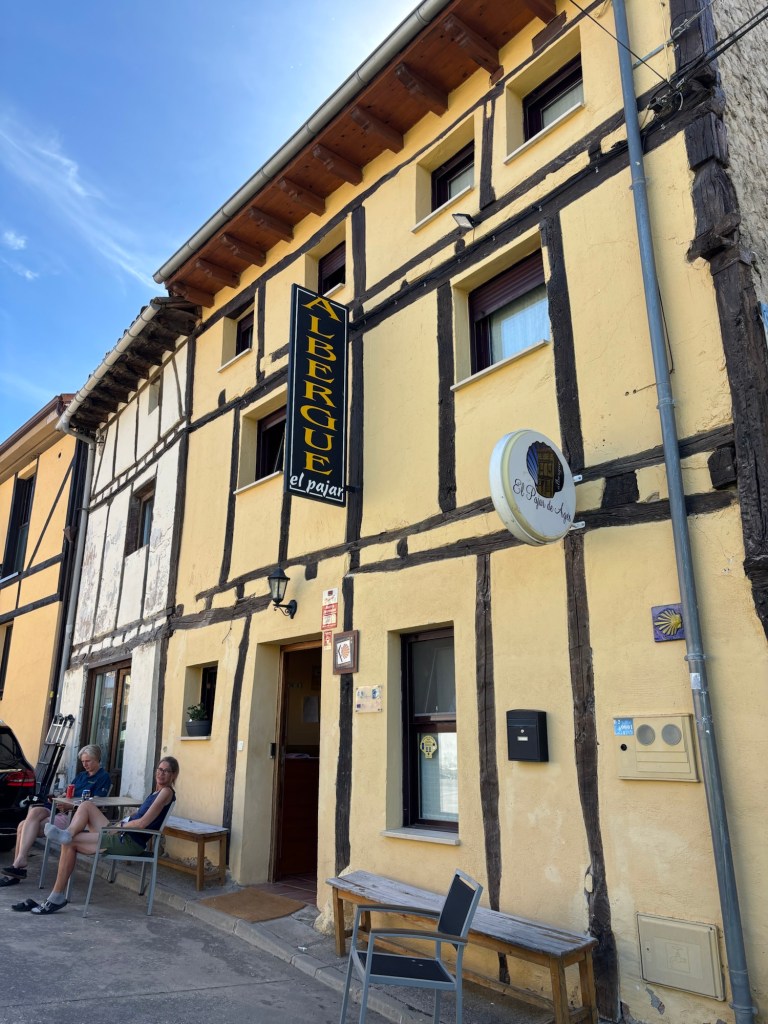
Ages was my destination for the evening, within striking distance of Burgos in the morning. It turned out to be a beautiful village with lots of half-timbered houses. I stayed at El Pajar, my last albergue of the trip.
Since I got there late in the afternoon I had the last lower bunk bed in a room for eight. Mostly Germans about my age, it seemed. I stretched out for awhile and put my legs up.
Next to me was a very nice Danish woman about my age. On the upper bunk was a younger German guy with many tattoos. He volunteered that he didn’t have a permanent home in Germany, but was living from albergue to albergue along the Camino. Hmm.
The room was pretty crowded with everyone’s stuff so I put my duffle bag away in the locker and took my valuables to the shower with me. Afterwards, I took a stroll around the village before dinner.


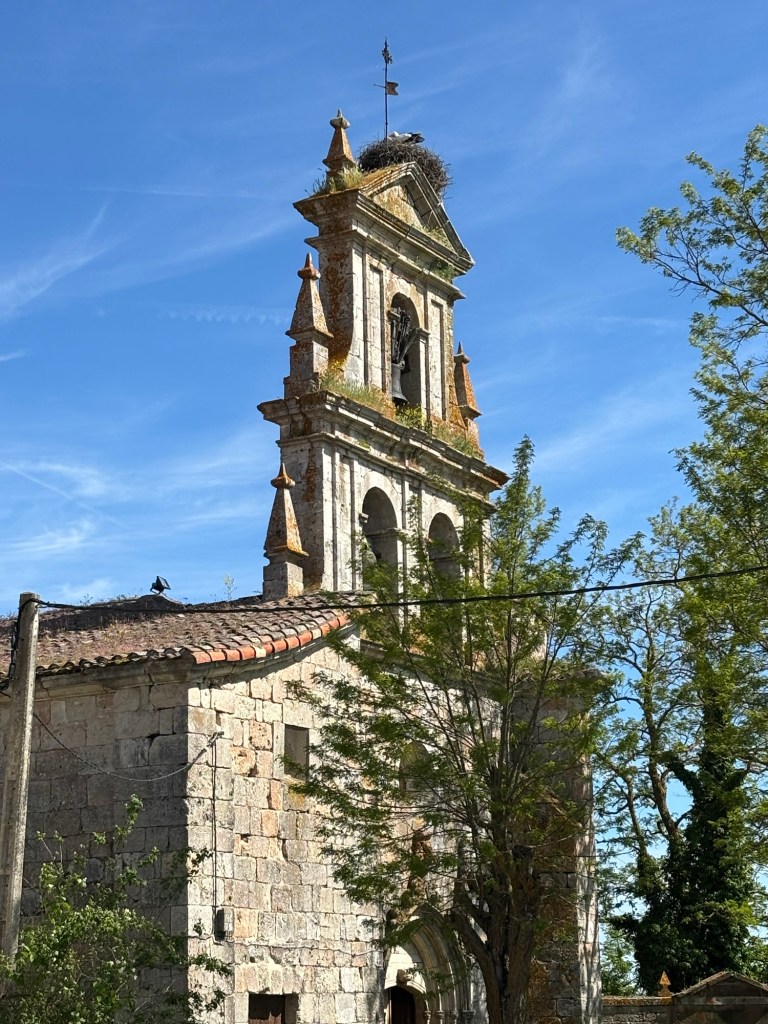
The church was open! Shocking! An elderly woman held down the fort and asked for 1€ to support repairs of the large cracks in the ceiling. I was happy to contribute. the church was 16th century like the much of the village.
It’s not often that you see an active stork nest so close up. I sat on a medieval stone bench and watched one of the storks come and go.
The Inn next door to the albergue was serving dinner, so I found a seat inside, and the nice Danish woman joined me. I really enjoyed our conversation. She was surprised I’d been to Bornholm. She went there for short weekend trips. I told her about Grandpa Ted immigrating to San Francisco in 1911 and she said, “We were a poor country then. Many people immigrated to California at that time.”
The dinner was so flavorful. I had a bean soup and fish. The couple who ran the place were working hard serving everyone, and they bickered the whole time.
Everyone settled down to sleep pretty early and one guy across the room was really cutting wood. I had my earbuds ready, but then I think I fell asleep and somehow slept through until morning.
 One Footestep at a Time